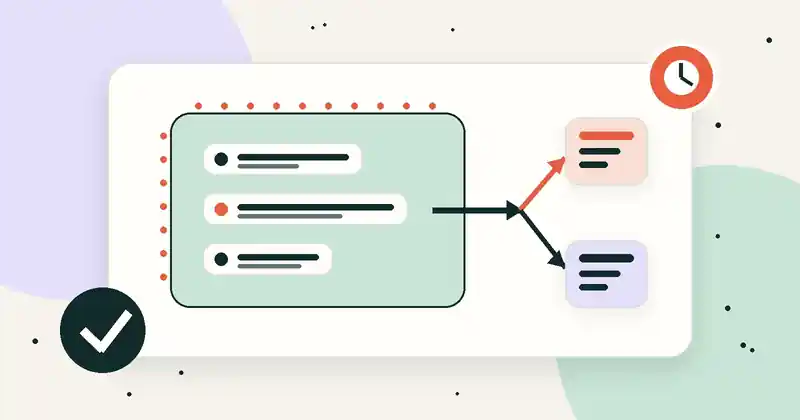

Underestimating projects is usually a system problem, not bad luck
One project running long can be bad luck. Five projects in a row running long is data. If you repeatedly quote forty hours and finish at sixty, the pattern is telling you that your estimation process is incomplete. Working faster may help at the margins, but speed cannot fix an estimate that systematically ignores whole categories of work. The first useful step is to stop treating every overrun as a unique surprise and start asking which parts of your estimating method consistently disappear before the proposal is sent.
Underestimation is expensive because the missing hours do not disappear. On hourly work, they can create uncomfortable budget conversations. On fixed-price work, they come directly out of your margin. A project that looked profitable at the proposal stage can become weeks of unpaid work while the client sees only the price you already agreed. That is why project estimation is not an administrative task performed before the real work. It is part of the commercial model of the work itself.
The solution is not to add a random thirty percent to everything. A blanket buffer can hide weak thinking just as easily as an optimistic estimate can. The better approach is to understand where your estimates leak: hidden work, unclear scope, dependencies, revisions, context switching, technical uncertainty and simple optimism about how smoothly a normal day will go. Once you know the source of the error, you can price or control it instead of paying for it yourself.
You estimate visible production and forget the work around it
Most people are better at estimating the task they can see than the work required to deliver it. A designer estimates the screens. A developer estimates the implementation. A writer estimates the draft. A consultant estimates the workshop. But projects also contain discovery, meetings, preparing access, reviewing feedback, testing, fixing regressions, deployment, handover, invoicing and follow-up. None of those tasks are imaginary just because they are not the main deliverable.
This is one reason experienced freelancers can still underestimate familiar work. The core task may genuinely take eight hours, but the complete delivery path takes twelve. If the estimate is built from only the eight visible hours, experience can make you confidently wrong instead of cautiously wrong. The better you know the production task, the easier it can be to forget the surrounding coordination because your attention goes straight to the part you know how to execute.
Create a standard checklist of hidden categories and use it on every estimate. You will not need every category every time, but the checklist forces a deliberate decision. It is much safer to decide that handover needs zero hours than to forget that handover exists. A reusable checklist also stops each new proposal from depending on whether you happen to remember the painful details of the last project while writing this one.
- Discovery, requirements and clarification
- Client communication and project management
- Content preparation, data cleanup or access setup
- Testing, QA, accessibility and device checks
- Included revision rounds and rework
- Deployment, handover, documentation and post-release verification
Optimism bias quietly turns the best case into the official plan
When you know how to do a task, your brain tends to picture the clean path. The API documentation is correct. The client sends access on time. The design is approved in one round. The package installs. The legacy code behaves. Nobody schedules an urgent meeting in the middle of your focused work block. The estimate becomes a description of a good day rather than a prediction of a normal project. Because each assumption sounds reasonable on its own, the final number can still feel professional.
The fix is not pessimism. It is range thinking. For uncertain tasks, estimate an optimistic, most likely and pessimistic duration. If a migration could take four hours when the data is clean, eight hours in the normal case and sixteen when hidden inconsistencies appear, writing down all three numbers changes the conversation. You can see the uncertainty instead of burying it inside one confident guess. A weighted planning estimate can help, but the important part is preserving the range and knowing what creates it.
A range also tells you when a fixed price is dangerous. If the pessimistic case would destroy the margin, the task is not ready for a fixed commitment. You may need paid discovery, a capped hourly phase or a decision checkpoint before quoting the remainder. That is not weakness and it is not an inability to estimate. It is refusing to pretend that missing information has no economic value just because the client would prefer a single number today.
Unclear scope makes every estimate fragile
You cannot estimate a noun. Website, dashboard, branding, integration and automation are categories, not scopes. A useful estimate needs observable outputs and boundaries: how many pages, which states, which integrations, which devices, who provides content, how many revision rounds, what success looks like and what is explicitly excluded. Without those boundaries, the hours are attached to an imaginary version of the project rather than an agreed one.
When scope is vague, both sides fill the empty space with different assumptions. You imagine a standard contact form; the client imagines conditional fields, CRM synchronization and analytics events. You imagine one decision-maker; the client has three departments. You imagine supplied product data; the client assumes you will clean and import it. The estimate may be perfectly calculated against your imagined project and still fail because the imagined project was never the real one.
Before estimating hours, write a short definition of done. If two reasonable people could disagree about whether the work is complete, keep clarifying. You do not need every pixel or line of code defined in advance, but the boundaries must be clear enough that a new request can later be identified as either included work or a scope change. Good scope is not about predicting every conversation. It is about knowing what the current agreement actually contains.
- Named deliverables rather than broad project labels
- Acceptance criteria for the important outcomes
- Number and meaning of included revision rounds
- Client responsibilities and required inputs
- Known exclusions and third-party costs
- A written process for approving changes
Client dependencies belong in the estimate and the schedule
A project can be technically simple and operationally slow. You may need credentials, copy, legal approval, product data, stakeholder decisions or access to a third-party vendor. If those inputs arrive late, the number of hands-on hours may not change much, but the project can still become more expensive because of context switching, rescheduling and repeated re-entry into work you thought was finished. Waiting is not always billable, but disruption is still real.
Dependencies need an owner and a date. Write them into the estimate instead of treating them as background assumptions. Client provides final copy before implementation begins is not administrative decoration. It is a condition that protects the timeline and helps both sides understand what happens if the condition changes. If late inputs will move the delivery date, say so. If they may create extra rework, define how that rework will be handled.
Where a dependency can change the amount of work, include that effect in the estimate. Data that may require cleanup, an unknown API, or content supplied in unpredictable formats should not be priced as if the cleanest version is guaranteed. Either price the uncertainty, narrow the accepted input, or make the uncertain phase hourly until the facts are visible. The client does not benefit from a cheap estimate that becomes a crisis later.
Use ranges and risk-specific buffers instead of one magic percentage
A buffer is useful when it is attached to a reason. If a well-known design task is predictable, it may need little or no contingency. If a third-party integration has weak documentation, it may need a wider range. Adding twenty percent to both tasks equally is easy, but it tells you nothing about where the project is actually risky. It also teaches you very little after the project because you cannot tell whether the buffer was necessary or simply convenient.
Start with a task breakdown. Mark tasks as predictable, variable or unknown. Use your historical actuals for predictable work. Use ranges for variable work. For unknown work, consider discovery before committing to a fixed number. Then add contingency only where residual uncertainty remains after those steps. This gives you a number that reflects the actual shape of the project rather than a generic rule copied from somebody else's business.
This approach also makes pricing easier to explain. You do not need to show the client every internal probability, but you can explain that the quote includes defined work, stated assumptions and a controlled allowance for a specific uncertain integration. That sounds more professional because it is more professional. The contingency has a reason, and if the uncertainty can be removed before commitment, you may be able to reduce it.
- Use historical averages for repeatable work
- Use three-point estimates for uncertain tasks
- Use paid discovery for unknown work with a wide range
- Apply contingency to identified risks, not automatically to every line
- Keep a change process for new scope after approval
Compare estimated hours with actual hours after every project
Your estimates will not improve if the only number you save is the final invoice. After delivery, compare estimated and actual time by task category. A project that was ten hours over budget is useful information only when you know where the ten hours came from. Was implementation slower? Did review expand? Did the client delay decisions? Was deployment underestimated? Did you forget communication entirely? The project total tells you that you missed. The categories tell you how.
Keep a short reason for meaningful variance. Over time, patterns appear. You may discover that coding is accurate within ten percent while content preparation regularly takes twice as long. You may learn that projects with three stakeholders produce more revision time than projects with one. You may see that deployments on one client's infrastructure always take longer. Those observations are better than generic internet advice because they describe your work, your clients and your process.
Update reusable estimate templates with the new evidence. The goal is not to predict every project perfectly. It is to make each new estimate less dependent on memory and optimism. A professional estimator is not someone who never misses. It is someone whose misses become data instead of repeating as surprises. If the same category is overrun three times, the fourth estimate should visibly change.
A practical example: how a 40-hour project becomes 61 hours
Imagine a small website project. You estimate 8 hours for design and 32 hours for implementation, so the quote is based on 40 hours. The project finishes at 61. The obvious reaction is that development was slower than expected, but the time record shows something else: discovery took 4 hours, client communication 5, content cleanup 4, testing 3, deployment and handover 2, and an extra revision round 3. The original design and implementation estimate was almost correct. The project estimate was not.
A better version would have estimated the full delivery system: 4 hours discovery, 8 design, 32 implementation, 4 communication, 4 content preparation, 3 QA, 2 handover and one included revision allowance of 4 hours. That is 61 hours before any risk contingency. Nothing magical happened. The missing time was visible once you stopped defining the project as only production. The fix is not charging more for the same forty hours. It is admitting that the project was never a forty-hour project.
This is the important shift: do not ask only how long it will take you to build the main thing. Ask what work must happen for this project to reach an accepted, delivered result. The second question produces a number you can actually run a business on. It also gives the client a more realistic schedule because the plan contains the conversations, review and delivery work that will happen anyway.
- Estimate the complete delivery path, not only production
- Name uncertainty instead of hiding it inside confidence
- Attach dependencies and assumptions to the estimate
- Track actual time in the same categories you estimated
- Update the next estimate with what the last project taught you
Turn the method into a real estimate
Break work into tasks, add time and rates, then create a clear client-ready estimate.
Open the free calculatorFrequently asked questions
How much buffer should I add to a freelance project estimate?
There is no universal percentage. Add contingency to identified uncertain tasks and use your historical data for predictable work. If uncertainty is too wide to price responsibly, use paid discovery or hourly work before committing to a fixed total.
Why do my projects always take longer than I estimate?
Common causes are estimating only visible production, unclear scope, forgotten communication and QA, optimistic assumptions, client dependencies and untracked revision work. Compare estimated and actual hours by category to identify your own recurring pattern.
Should I charge the client when my estimate was wrong?
That depends on the pricing model and agreement. On fixed-price work, your estimation error is normally your risk unless scope changed. On hourly work, actual approved hours may be billable. New scope should be handled through a written change process rather than hidden inside an estimate overrun.
How do I get better at estimating project hours?
Break projects into smaller tasks, include hidden delivery work, use ranges for uncertainty, record assumptions and compare each task estimate with actual time after delivery. Reusable historical data improves estimates far faster than guessing from memory.